FESPACO: fifty-five years of cinema in Ouagadougou
Founded in 1969 in the Burkinabè capital, the continent's biggest festival remains the barometer of African cinema.
Équipe Afrollywood Magazine • 8 min read
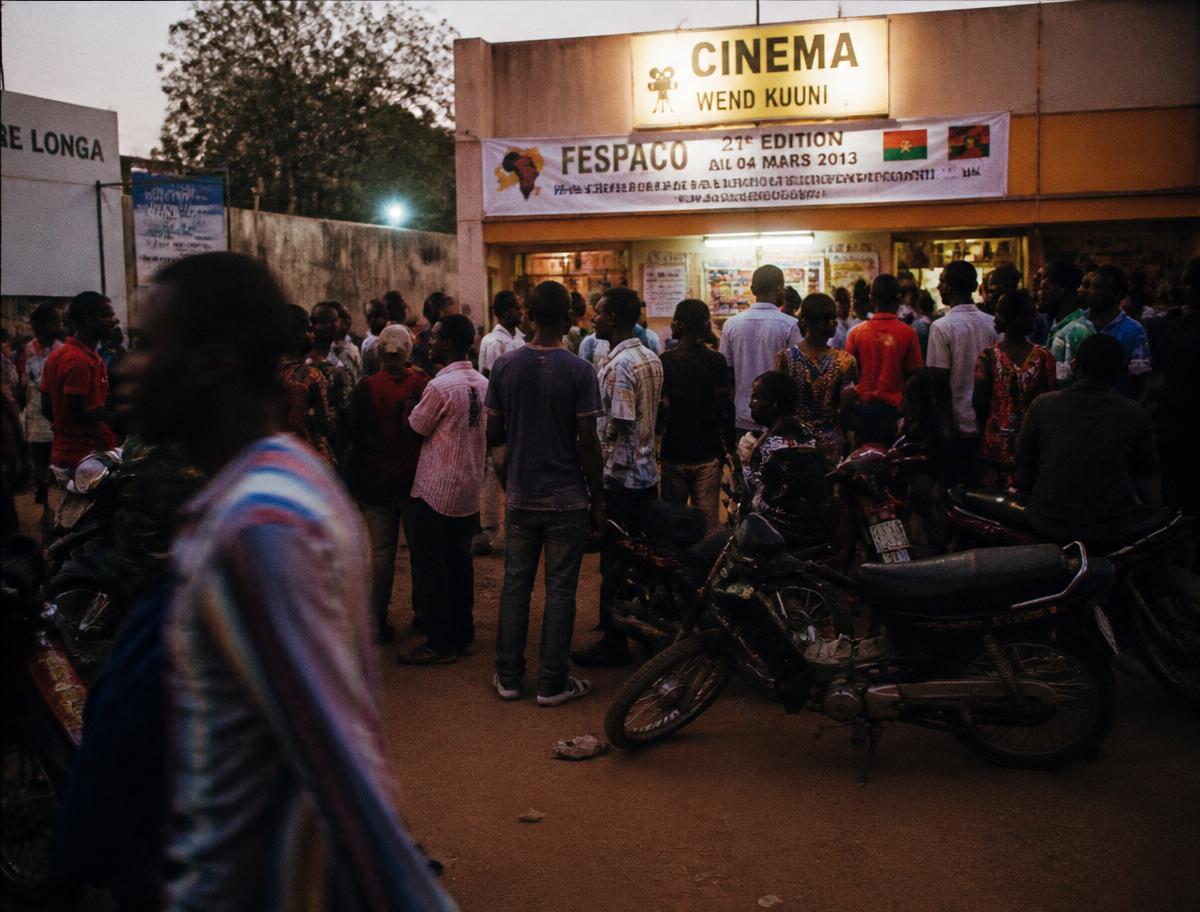
It all began in February 1969. In Ouagadougou, a group of film lovers gathered around the Franco-Voltaic cultural centre organised an “African Film Week”: some twenty films, five countries represented, a few thousand spectators. The event took the name FESPACO — the Panafrican Film and Television Festival of Ouagadougou — in 1972, and became biennial in 1979, alternating with the Carthage Film Days, created in Tunisia as early as 1966.
Burkina Faso, then Upper Volta, was no accidental choice. The country nationalised film distribution in 1970, created a national cinema company and made the seventh art a matter of state. Under Thomas Sankara in the 1980s, the festival became as much a political platform as an artistic one: cinema was conceived there as a tool for decolonising the gaze.
The Étalon de Yennenga, the continent's highest honour
Created in 1972, the Étalon de Yennenga takes its name from the legendary princess whose bolting horse led her to found the Mossi people. The trophy honours the best African feature film. Its roll of honour traces a history of the continent: Oumarou Ganda's “Le Wazzou polygame” (Niger) in 1972, Souleymane Cissé's “Yeelen” (Mali), Idrissa Ouedraogo's “Tilaï”, Gaston Kaboré's “Buud Yam” in 1997, and Apolline Traoré's “Frontières”.
Women filmmakers long remained on the margins of a heavily male competition: it took until 2023 for Tunisia's Kaouther Ben Hania and, above all, director Apolline Traoré to stand among the favourites. At the 29th edition, in March 2025, the Golden Stallion went to “Katanga, la danse des scorpions” by Burkina Faso's Dani Kouyaté, a political fable about the succession of power in an imaginary kingdom.
We do not only need to make films: we need to show them, here, to our own audience.
A festival under pressure
FESPACO takes place in a country facing a major security crisis since 2015 and repeated political instability. The 2021 edition, postponed to October because of the pandemic, and the 2023 edition were both held under reinforced protection. The festival nevertheless maintained its film market (MICA), its training workshops and its heritage restoration fund — indispensable when part of Africa's original negatives still sit in European laboratories.
That is where the essential question lies: who owns the images. The African Film Library in Ouagadougou holds several thousand reels, often unique copies. Digitisation campaigns run with the Cinémathèque française, Martin Scorsese's World Cinema Project and The Film Foundation have saved Sembène's “Black Girl”, Djibril Diop Mambéty's “Touki Bouki” and Med Hondo's “Soleil Ô”, all restored in 4K and screened again at festivals during the 2010s.
What next?
FESPACO remains the only place where, every two years, filmmakers from the continent and the diaspora meet funding bodies, streaming platforms and distributors. Its strength is also its fragility: dependent on public money and international partners, it embodies the question running through all of African cinema — how to produce, show and preserve your own stories without depending on others.