
Ousmane Sembène, the writer who invented African cinema
From “Borom Sarret” to “Moolaadé”, the Senegalese filmmaker built a visual grammar for telling Africa from within.
Équipe Afrollywood Magazine • 7 min read
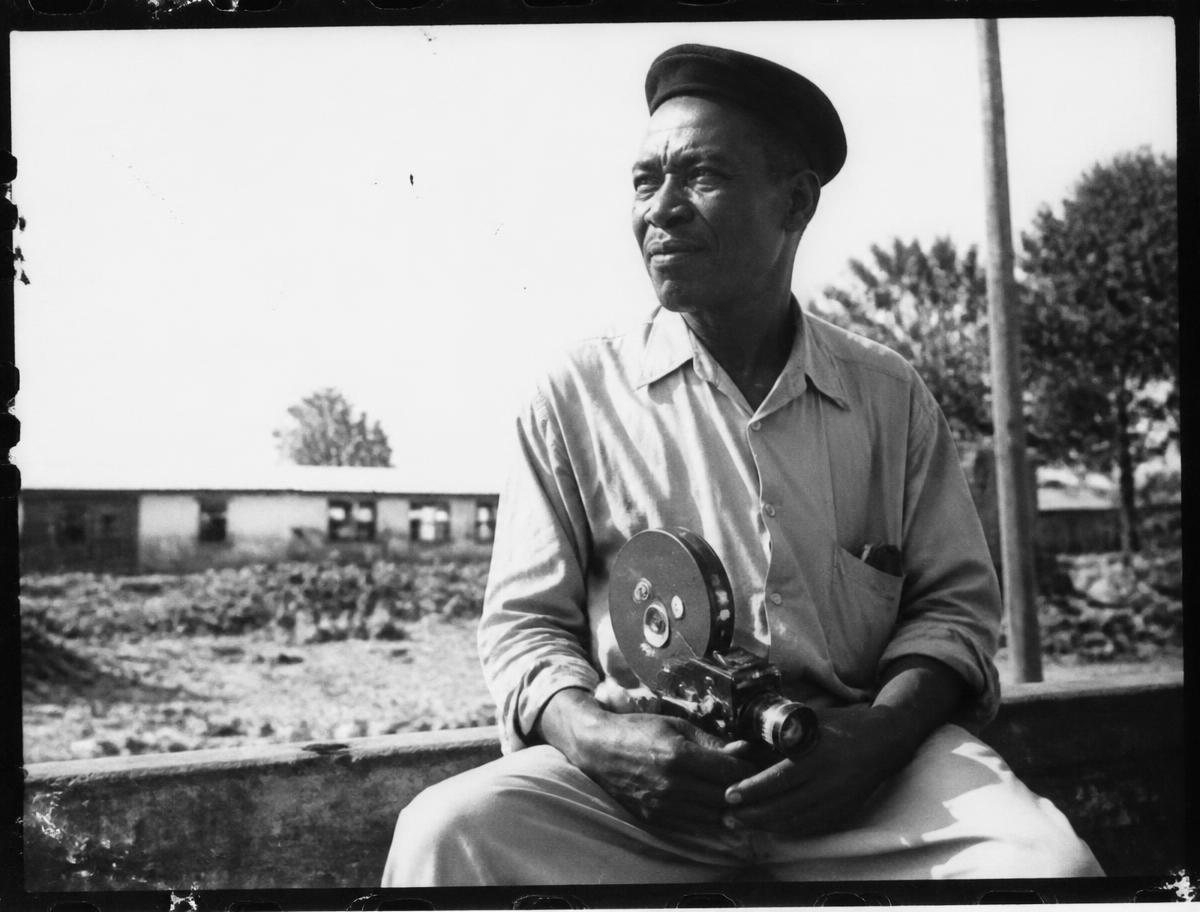
Born in 1923 in Ziguinchor, in Casamance, Ousmane Sembène served as a colonial infantryman during the Second World War, then worked as a docker in Marseille, became a trade unionist and finally a novelist. “Le Docker noir” (1956) and “God's Bits of Wood” (1960), a fresco of the Dakar-Niger railway strike, brought him a literary readership. But Sembène reached a conclusion: in a country where illiteracy dominated, books did not reach the people they were about. He left to train in cinema in Moscow, at the Gorky studios, under Mark Donskoy.
1963: the first film
“Borom Sarret”, an eighteen-minute short shot in Dakar in 1963, follows a day in the life of a cart driver who ferries customers from one neighbourhood to another and ends up stripped of everything. It was the first film made in sub-Saharan Africa by an African. Three years later, “Black Girl” (1966), the first sub-Saharan feature, told the story of a young Senegalese woman employed as a maid on the French Riviera who takes her own life. The film won the Prix Jean-Vigo and set a tone: dry, frontal, political.
With “Mandabi” (1968), Sembène crossed a decisive threshold: he shot in Wolof, refusing to have his characters speak a language most of his audience did not understand. That choice — also shaped by a confrontation with his French financiers — founded a demand that still runs through the continent: filming in national languages.
Cinema is my people's evening school.
A body of work built on conflict
Sembène never stopped colliding with the authorities. “Ceddo” (1977), which stages villagers' resistance to forced Islamisation and to the slave trade, was banned for eight years in Senegal, officially over a spelling dispute about the title. “Camp de Thiaroye” (1988), co-directed with Thierno Faty Sow about the massacre of Senegalese infantrymen by the French army in December 1944, won a prize in Venice but remained invisible in France for years.
His last film, “Moolaadé” (2004), shown at Cannes in Un Certain Regard where it won the section's prize, confronted female genital cutting through the figure of a woman who grants sanctuary to four girls in flight. At 81, Sembène delivered a luminous film, shot in Burkina Faso, in which women's speech carries the story from beginning to end.
A living legacy
Sembène died in Dakar in June 2007, leaving behind a method more than a style: start from social reality, shoot in a local language, address African audiences first. Traces of it can be found in Abderrahmane Sissako, Mati Diop, Ramata-Toulaye Sy and Alain Gomis. His films, long hard to access, now circulate in restored versions — the minimum condition for a history of African cinema to be written with its own images.