
Restitute, restore: the battle for African images
Negatives held in Europe, lost prints, fragile archives: the continent's film heritage is being saved one image at a time.
Équipe Afrollywood Magazine • 6 min read
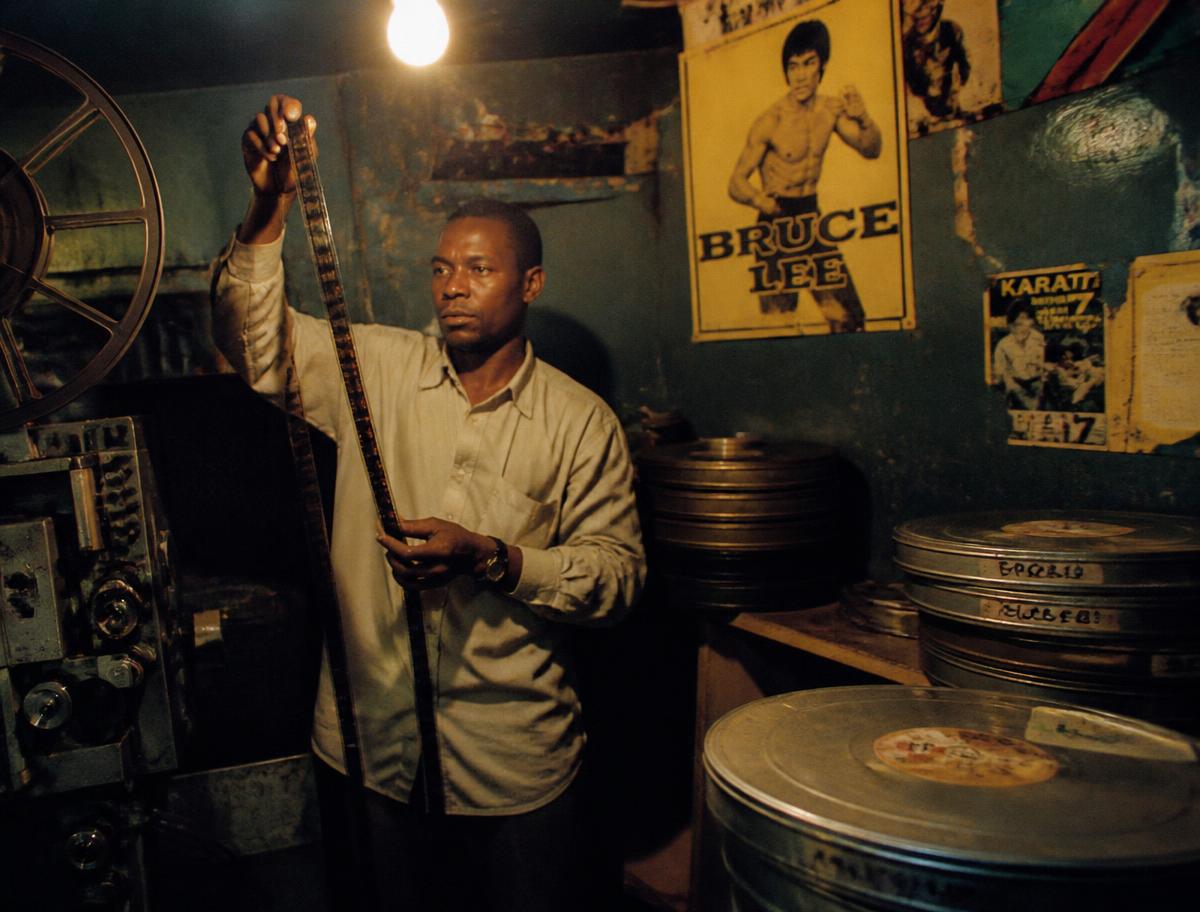
A large share of African films from the 1960s to the 1990s was shot with European technical means: stock bought in France, developed in Paris, edited and mixed in Europe. The result: original negatives often stayed in foreign laboratories, some since liquidated, while the release prints circulating on the continent degraded under heat and humidity.
The major restoration campaigns
The World Cinema Project, created by Martin Scorsese within The Film Foundation, has restored several major works in 4K: Djibril Diop Mambéty's “Touki Bouki” (Senegal, 1973), Med Hondo's “Soleil Ô” (Mauritania, 1970), Ousmane Sembène's “Black Girl” and “Borom Sarret”, and “Al-Mummia” (“The Night of Counting the Years”) by the Egyptian filmmaker Shadi Abdel Salam. These restorations, carried out with the Cineteca di Bologna, have returned to screens at festivals across the continent.
The African Film Library in Ouagadougou, attached to FESPACO, holds several thousand items — reels, posters, photographs — and has been digitising since the 2010s with international support. The Tangier film archive in Morocco and the archives of the Institut du monde arabe complete the picture for North Africa.
From film to object: the Dahomey precedent
The question of film heritage intersects with the more widely covered question of artworks. In November 2021, France returned twenty-six pieces from the royal treasures of Abomey, looted in 1892, to Benin — a restitution documented by Mati Diop in “Dahomey”, Golden Bear 2024. The Sarr-Savoy report submitted to the French president in 2018 estimated that an overwhelming share of Africa's material cultural heritage sits outside the continent.
An archive is not a stockpile: it is a condition of possibility for writing your own history.
Restoring a film is expensive — several tens of thousands of euros for a feature — and requires legal access to the original elements, often held by scattered rights holders. That is why professionals argue for regional public archiving policies, and for every restoration to be accompanied systematically by the deposit of a digital copy in an African institution.