Streaming in Africa: who now decides which films we see?
Netflix, Showmax, Canal+, Prime Video: in less than a decade, platforms have become African cinema's main gateway. An investigation into a shifting power to programme.
Équipe Afrollywood Magazine • 10 min read
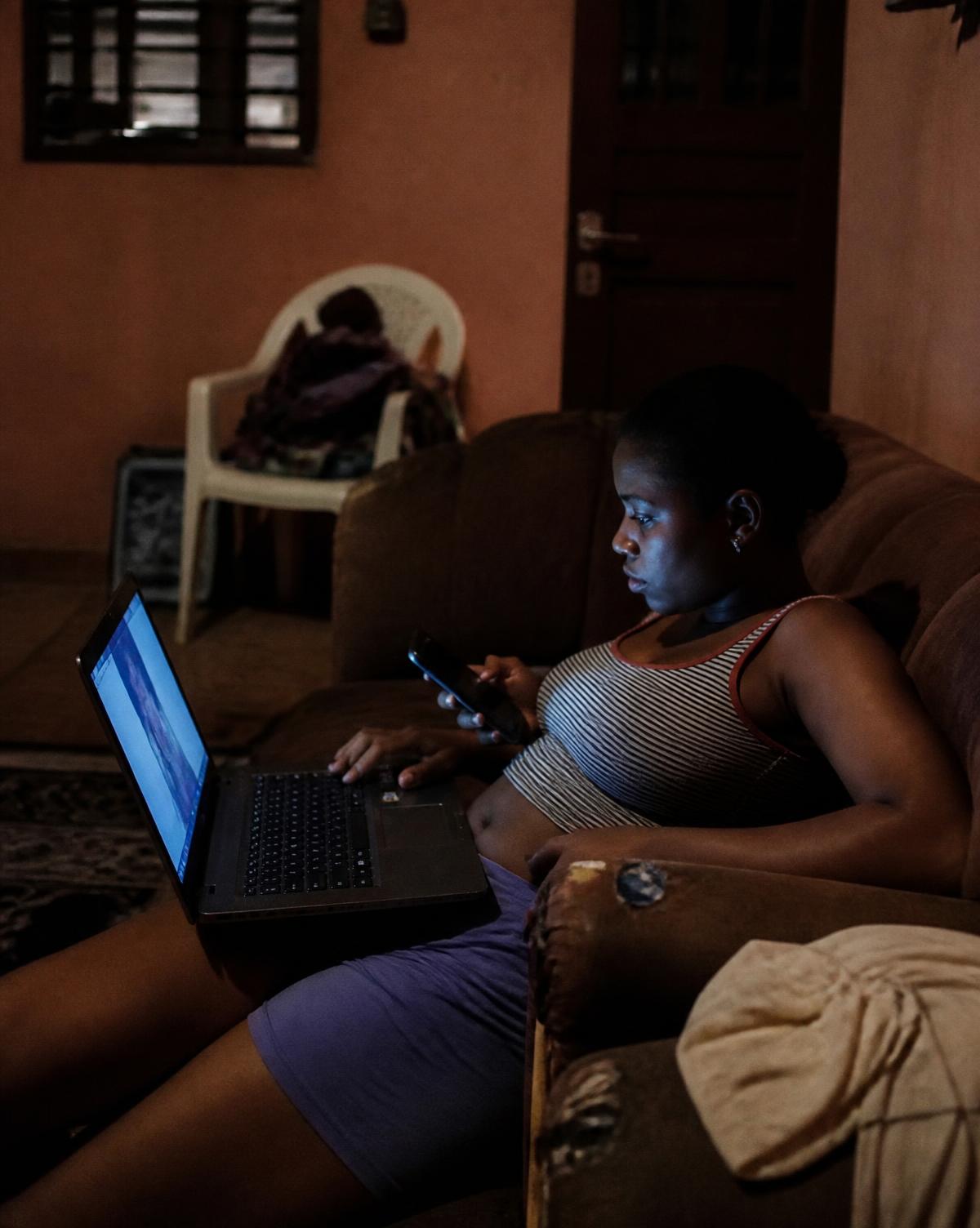
For half a century, the question “where do you watch African films?” had a simple answer: in a handful of urban cinemas, on public television, and at festivals. In less than a decade, the answer changed in kind. Netflix opened its African office in Johannesburg in 2020 and commissioned its first Nigerian and South African original series. Showmax, a subsidiary of South Africa's MultiChoice group, bet on low-cost local production and football. Canal+ pushed its A+ channels and francophone co-productions before taking control of MultiChoice through a takeover offer launched in 2024. Prime Video, a later arrival, scaled back on the continent from 2024. At the end of the chain, YouTube remains, by volume, the world's largest distributor of African fiction.
The gateway has moved
What moved is not only the screen: it is the gateway. Financing a film no longer depends first on a television pre-purchase or a public fund, but on a platform commission or a rights sale after a festival. For a producer in Lagos, Accra or Abidjan, that changes three concrete things: cash arrives faster, the margin is locked in advance, and ownership of the film often leaves with the contract.
They buy a film from us for the whole world, for ten years, and we are asked to see that as a stroke of luck. Sometimes it is. But you do not build a catalogue with rights you no longer hold.
What the figures say — and do not say
Public data remains fragmentary. Platforms do not publish country-by-country audience figures; African regulators, with the exception of South Africa, collect almost nothing. What is known is that Nigeria produces more than a thousand films a year according to its national statistics bureau, that the continent has fewer than a thousand cinema screens for nearly 1.4 billion people, and that UNESCO estimates Africa's audiovisual industry already employs several million people while exploiting only a fraction of its economic potential. The gap between those three figures is enough to explain why streaming took hold so fast: it had almost no infrastructure to replace.
The 2024 backlash
The euphoria lasted until the sector's general contraction. From 2023, the big platforms cut original commissions everywhere. In Africa the effect was brutal, because the local ecosystem had not had time to build shock absorbers: projects halted in development, series not renewed, crews dispersed. Several South African and Nigerian filmmakers describe the same sequence — two years of continuous shooting, then twelve months of silence.
That slowdown had one positive consequence: it revived the debate about alternative models. Intra-African co-productions, regional platforms, neighbourhood cinemas, mobile tours, direct distribution on YouTube with advertising revenue, diaspora financing. None of these channels replaces a platform commission on its own. Together, they sketch a less dependent economy.
Four things to watch this decade
First: rights ownership. A film industry that does not hold its catalogue can neither restore it, nor re-release it, nor sell it twice. Second: audience transparency, without which no producer can negotiate. Third: regulation, particularly local-content quotas and investment obligations, today almost non-existent outside South Africa. Fourth: technical training, the only way to keep the added value — grading, sound, post-production — on the continent instead of exporting it.
Real cultural sovereignty is not about refusing the platforms. It is about having something to set against them the day they leave.
What to watch now
Three signals deserve attention in the coming months: the effective integration of MultiChoice and Showmax into Canal+, which will determine the programming power of the first pan-African group; Netflix's strategy after its corrective phase, between rare premium commissions and acquisitions of finished films; and the rise of local and regional platforms, whose survival will depend less on catalogue than on price and mobile payment.
African cinema has never had so many viewers. It has never had so little control over how those viewers encounter it. The whole decade sits inside that tension.